
How Much Protein Should Athletes Actually Eat?
Updated: May 15
It’s no secret that protein is having a moment. Everywhere you turn, whether on social media or the aisles of the grocery store, protein is a hot topic of discussion.
All of this talk about upping protein has people (especially athletes) confused about how much protein they actually need. Of course, protein is super important. It plays a critical role in recovery, performance, and overall health. But it shouldn't be put on a pedestal above the other macros (i.e. carbs and fat).
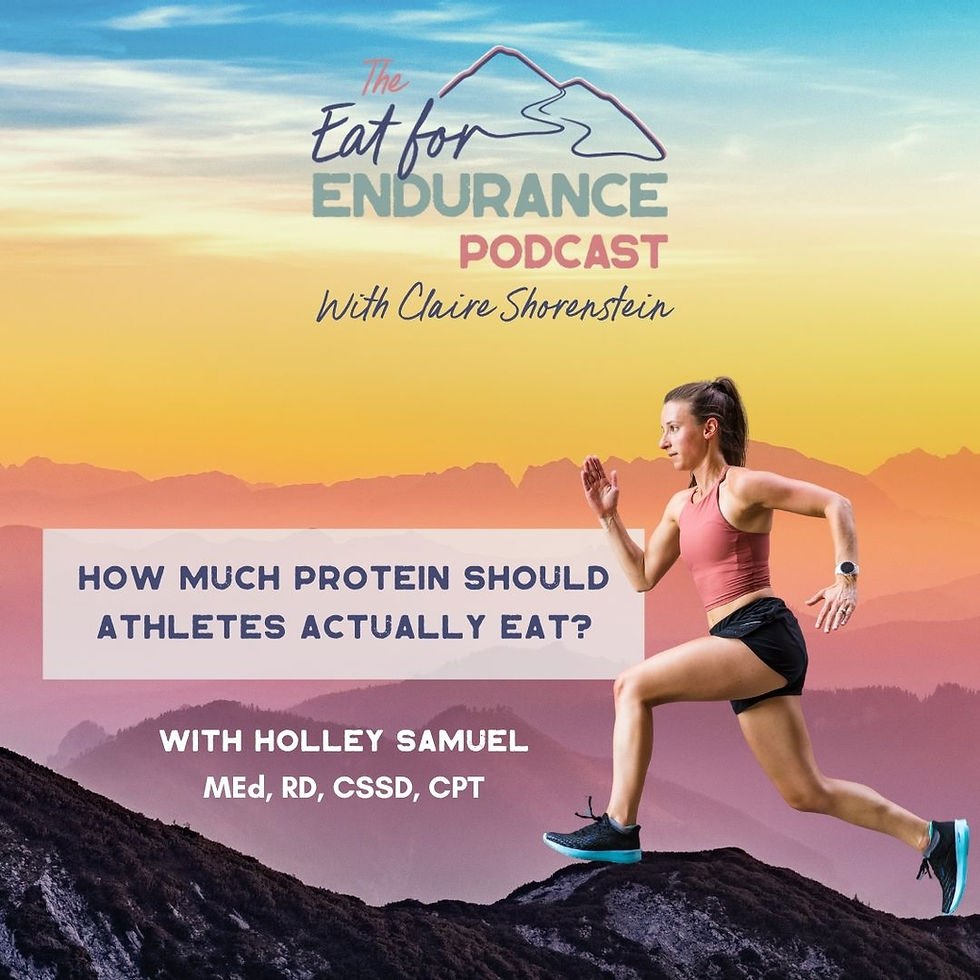
In episode 136 of The Eat for Endurance Podcast, I’m joined by Holley Samuel MEd, RD, CSSD, CPT to talk about all things protein in a practical, evidence-based way that you can actually apply to your life.
Holley and I discuss:
Why protein is everyone's favorite macro right now
Daily protein targets for athletes (and why more isn’t always better)
How protein needs change across life stages and training demands
Animal vs. plant protein and what athletes should know about both
Common protein myths and where recommendations go wrong
Protein timing considerations
When protein supplements can be helpful (and when they’re not)
The bottom line is: Yes, protein matters… a lot! But so do your unique fueling needs, and ensuring you’re getting a good balance of other macros, too!
How Much Protein Do Athletes Actually Need?
Compared to healthy, sedentary people, athletes do have increased protein needs. Active people need more protein to:
Support muscle repair and recovery
Maintain lean body mass, which includes muscles and bones
Adapt to training
Protein needs also increase slightly with age, and other factors (e.g. taking a GLP-1 medication, having a stress fracture, being in a caloric deficit, etc) also influence how much protein you should consume.
But does that mean everyone needs to consume 1g of protein per pound of body weight (= 2.2g/kg/day), as many people are saying online? No. The research does not support that. You don't need to suddenly double your protein intake just because you turned 50, for example.
Here's a general protein range for athletes and other people who regularly exercise:
~1.2 to 2 g/kg body weight per day
Higher during times of injury or extremely high training volume
This is a large range, and what YOU need will depend on your health status, age, physical activity level, goals, etc. I often provide my clients with a smaller range that suits their individual needs (e.g. 1.6-1.8g/kg/day).
Another thing to consider is how much protein you can realistically eat, while still getting in enough carbs and fats. For example, if someone is on the upper end of their protein range but struggling to get the bare mininum amount of carbs in to fuel their training, I would recommend reducing protein to make room for more carbs.
Can You Eat Too Much Protein as an Athlete?
While I love that protein is getting more attention, I don't love the confusion and misinformation that has resulted.
Influencers and gym bros are fear mongering people into consuming crazy high amounts of protein, while brands are taking advantage of the increased interest by marketing endless supplements like powders, drinks, bars, and snack foods. Some of these supplements are fine, while others are totally useless (looking at you, protein chips, pretzels, and popcorn).
Here’s what Holley and I want athletes as well non-athletes to understand: protein is essential, but it’s not the main character. And it's certainly not superior to the other macronutrients.
I love how Holley put it...“Protein seems to get the gold star… it's got the King's throne, [while] carbohydrates and fat kind of take turns being the ugly stepsister that we're demonizing.”
What’s most important is having a balanced approach to nutrition, which means including adequate carbs and fats too. If you eat too much protein relative to your needs, you may not be hungry enough to consume the right amount of carbs or other nutrients that support general health and performance.
That's where we start to see issues. Not necessarily because elevated protein intake is harmful in itself, but because it's often unnecessary, hard to sustain, and can crowd out other important nutrients.
In real life, this often looks like struggling to get enough carbs in to fuel training, feeling overly full or restricted, relying heavily on protein powders and supplements, and missing out on nutrient-dense whole foods that support overall health.
As Holley explained, “It’s not going to be sustainable to consume a crazy high amount of protein for a long period of time… it's just going to be really hard for a lot of people to do that and feel well and be able to train at the level they want.”
A more effective approach is:
Determining a reasonable, realistic protein goal for YOU
Spreading protein intake out across the day (~20–40g+ per meal)
Building balanced meals around protein (carbohydrates + fat + "color" or fruit/veg)
Choosing a variety of protein sources (animal and/or plant options)
Supplementing only when necessary (e.g. protein powder post long or hard session)
This is also where quality matters.
Animal proteins (like beef, poultry, dairy, and eggs) provide complete amino acids and key micronutrients that support recovery and overall health. Plant proteins absolutely have a place too, but often require more intention and variety to meet fueling demands.
All in all, you don’t need to overdo protein… you just need to consume it strategically, and rely mostly on foods that are naturally rich in protein rather than supplements.
Protein for Athletes: Key Takeaways
Protein is important for athletes, but it’s often overemphasized at the expense of other nutrients
Most endurance athletes do well with ~1.4-1.8g/kg/day, not extreme intakes
More protein ≠ better performance once needs are met
Undereating carbohydrates is a common consequence of over-prioritizing protein
Timing helps, but meeting total daily needs matters most
Aim for 20–40g protein per meal, and the rest in snacks
Both animal and plant proteins can support performance
The best approach is individualized, sustainable, and aligned with your training/daily life
FAQ: Protein for Athletes
How much protein do endurance athletes need per day? Most endurance athletes do well with around 1.2 to 2g of protein per kilogram of body weight per day, with most falling in the 1.4 to 1.8g/kg range. Needs increase slightly with age, injury, very high training volume, or being in a caloric deficit. The right amount for you depends on your individual health status, goals, and overall diet.
Is 1g of protein per pound of body weight necessary? No, that works out to 2.2g/kg/day, which is on the very high end and unnecessary for the majority of endurance athletes. Consuming more protein than you need doesn't translate to better performance or recovery, and can make it harder to eat enough carbohydrates to fuel your training.
What's the best way to spread protein intake throughout the day? Aim for roughly 20 to 40g+ of protein per meal, spread across three meals, with the remainder coming from snacks. Whie total daily protein intake matters most, this approach best supports muscle protein synthesis, satiety, and is more practical than eating a very large amount of protein in one or two sittings.
Can plant-based athletes get enough protein? Yes, but it requires more intention. Plant proteins (except for soy) are incomplete, meaning they do not have adequate amounts of all the essential amino acids that you need. Plant-based athletes should focus on variety, combining different protein sources throughout the day, and may need to aim toward the higher end of their protein range to meet their needs.
When is a protein supplement actually worth using? Protein powder can be genuinely useful after long or hard training sessions when whole food intake is inconvenient or appetite is low, and it's also very helpful for plant-based athletes with high protein needs. It's less necessary if you're already eating (or can eat) adequate protein through food. Skip the protein chips, pretzels, and other heavily marketed high-protein snack foods. The amounts are typically too small to make a meaningful difference, and they taste gross.
Ready to Stop Guessing About Your Protein Intake?
If this episode has you rethinking your own protein intake and overall fueling approach, I’m here to help!
I work with athletes and active people of all levels to create personalized, evidence-based nutrition strategies that support performance, recovery, and long-term health… without rigid rules or fear-mongering (no carbs are bad around here!).
Whether you're:
Training for your next race
Struggling with energy, recovery, or GI issues
Trying to balance protein, carbs, and total intake
Or just feeling confused by all the conflicting nutrition advice
... I’d love to help.
Here are a few ways to get nutrition support:
Join my low-cost, low-commitment Fuel for Life Crew membership for just $39/month, (cancel anytime)
Browse my nutrition masterclasses (all are also included in the membership)
Grab my Eat for Endurance Mini Guide Bundle (a collection of 6 mini guides, worksheets, and a bonus supplement resource)
Download my free fueling resources
Fill out a new client inquiry form for comprehensive 1:1 coaching (limited spots available)
Meet My Sponsor: Good Ranchers
Thank you to my sponsor, Good Ranchers, for supporting this episode! Good Ranchers is a delivery service for all your favorite animal proteins, including chicken, beef, pork, and fish.
Having high-quality proteins stocked and ready to cook makes it so much easier to fuel well. I love that everything is vacuum sealed and pre-portioned out, so it’s quick to defrost whether you’re cooking for yourself, having friends over, or feeding the family.
Want to give it a try? Grab a one-time box or use code IRON for $40 off a one-time box or $100 off across your first three boxes when you sign up for a subscription. Plus, you get free protein of your choice! Make sure you share "The Eat for Endurance Podcast" in your post-purchase survey, so Good Ranchers knows you're supporting the show!
Other Easy (And Free) Ways to Support the Podcast
If you enjoy The Eat for Endurance Podcast, here are a few easy ways to support it:
Leave a 5-star rating and write a review wherever you get your shows
Subscribe/Follow The Eat for Endurance Podcast so you don't miss an episode
Shop my merch and affiliate codes for Skratch, Momentous, Tailwind and more
Join my Patreon community
Grab the Ultimate Fueling Sticker Pack to fuel in style
Disclaimer: All information provided is for educational and entertainment purposes only and is in no way meant to replace individual medical and nutrition recommendations.

Comments