
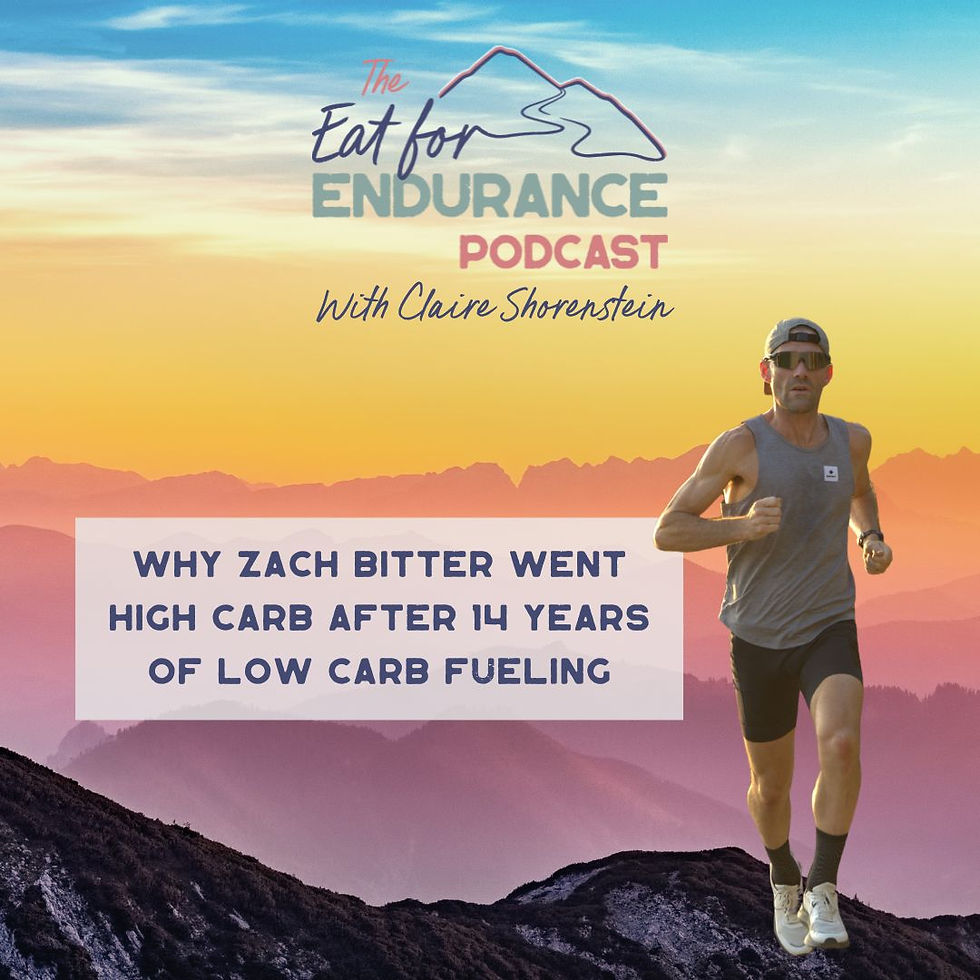
Why Zach Bitter Went High Carb After 14 Years of Low Carb Fueling
- Feb 19
- 4 min read
What if the fueling strategy you’ve followed for years is no longer the one that best supports your performance?
In episode 131 of The Eat for Endurance Podcast, I’m joined by elite ultrarunner and coach Zach Bitter for a thoughtful conversation about his experience with both low and high carb fueling.
Zach has broken World and American Records in the 100-mile distance, competed for Team USA at the World 100K Championships, and holds multiple national titles across ultra distances. But what makes this conversation especially interesting is not just what Zach has accomplished, it’s how willing he’s been to re-evaluate his nutrition strategy along the way.
Zach began experimenting with a high carb fueling approach this past summer, after following a low carb diet for 14 years. So far, he's had a very positive experience.
In this episode, Zach and talk about:
Why he originally went low carb as a younger ultrarunner
What his particular flavor of low carb fueling looked like in practice
What motivated him to dramatically increase his carb intake 8 months ago
How high carb fueling has influenced his recent training and racing
Why you shouldn't make one single diet your whole identity
The importance of curiosity and flexibility for long-term health and performance
This episode is full of nuance and underscores the fact that there is no one-size-fits-all diet.
From Low Carb to High Carb Fueling
Zach shares that when he first adopted a low carb approach, it aligned with his goals, the information and sports nutrition products available at the time, and his curiosity about metabolic efficiency. Over the years, he learned a lot about his body, his training response, and how nutrition needs change depending on training load.
As his training, racing, and priorities evolved, so did his fueling goals. Zach began deliberately increasing his carbohydrate intake, approaching it the same way he’s always approached nutrition and training… with experimentation, data, and openness rather than strict rules.
We talk through:
What initially sparked his interest in increasing carbs
How high carb fueling has influenced training quality and recovery
Why being overly attached to one nutrition identity can limit your potential
Stay Curious and Flexible as an Athlete
Two words that come up again and again in this episode are curiosity and flexibility. Zach emphasizes that what worked well for him at one stage of his career doesn’t automatically deserve a permanent place. Staying curious and flexible has allowed him to keep progressing and enjoy the process over time.
Zach reminds everyone, "don't be afraid to try something new, because if it doesn't work out, you can always go back to what you were doing before!"
Zach also cautions against labeling food as "good" and "bad," which is something I frequently tell my clients. He shares, “There's a lot of fear mongering around food...And that never really made sense to me once I got into the low carb stuff…These are tools at the end of the day. So looking at [food] as good or bad seems counterproductive and also [puts you] in a bad head space.”
If you take anything away from this episode, let it be the importance of regularly checking in with your daily and intraworkout nutrition. As you get older, your needs change and your training and other goals likely will evolve. And that means you need to reassess your fueling strategy too.
Key Takeaways from Zach Bitter
What worked for you in one season of life or training may not work forever
Adequate carbs are essential for endurance training, recovery, and performance
Nutrition experimentation doesn’t have to be extreme to be effective
Long-term success in endurance sport comes from staying curious and being flexible
Zach’s experience is a powerful reminder that fueling strategies are tools, not identities. The goal isn’t to be “right,” it’s to support your body and your goals as they evolve.
Looking for Fueling Support?
If this conversation has you rethinking your own fueling strategy, whether you’re curious about high carb fueling or simply increasing your carb intake, questioning past nutrition rules, or trying to better support your training and recovery, you don’t have to navigate that alone.
I work with endurance athletes who want evidence-based guidance without rigid rules, fear, or burnout.
Here’s what one client had to say about working together:
"I started working with Claire to better structure my recovery nutrition and race day nutrition plans to meet my goal of sustaining higher training volume and improving marathon speed as I age. I have become much more informed, strategic, and intentional with my carbohydrate intake and fluids before and during hard workouts/long runs. This has helped my performance, my recovery, and my confidence! I also really appreciated the way she blends compassion with a no-nonsense approach." - Jessica S.
Here are a few ways to get support:
Fill out a new client inquiry form for comprehensive 1:1 coaching (limited spots available)
Join my low-cost, low-commitment Fuel for Life Crew membership for just $39/month, (cancel anytime)
Browse my nutrition masterclasses (all are also included in the membership)
Grab my Eat for Endurance Mini Guide Bundle (a collection of 6 mini guides, worksheets, and a bonus supplement resource)
Download my free fueling resources
Read my blog posts on Carb Loading and the Best Carbs for Runners
Support the Podcast
If you enjoy The Eat for Endurance Podcast, here are a few easy ways to support the show:
Leave a 5-star rating and write a review wherever you get your shows
Subscribe/Follow The Eat for Endurance Podcast so you don't miss an episode
Shop my merch and affiliate codes for Skratch, Momentous, Tailwind and more
Join my Patreon community
Grab the Ultimate Fueling Sticker Pack to fuel in style
Disclaimer: All information provided is for educational and entertainment purposes only and is in no way meant to replace individual medical and nutrition recommendations.


Comments